
BIPV stands for building-integrated photovoltaics. These solar-generating products become part of a building element, such as roofing, façade cladding or glazing, while performing a job that element would otherwise do. The same surface produces electricity and helps complete the building envelope. That dual role changes how a project is designed, specified and maintained.
What makes a solar product BIPV?
A useful test is to imagine removing the photovoltaic product. Would the building need another roof covering, wall panel or glazing unit in its place? If so, the product may be building-integrated. If the original roof or wall remains complete underneath a separately mounted array, the installation is generally building-applied PV, often called BAPV.

The distinction is functional. A dark panel can look integrated while doing none of the building envelope’s work. BIPV products must satisfy the requirements of their location as building components and as generators. For a roof, that may involve weather resistance and replacement detailing. For glazing, it may involve daylight, thermal and safety performance. The U.S. Department of Energy’s BIPV overview describes this replacement of conventional building materials across roofs, façades, skylights and other surfaces.
Where is BIPV used?
Roofs are a familiar starting point. Solar shingles, tiles and other integrated roof products replace part of the outer covering. The roof still needs a continuous, maintainable weather barrier around edges, penetrations and adjacent materials.
On façades, photovoltaic cladding or curtain-wall elements can occupy surfaces that would otherwise use opaque panels or glass. Transparent or semi-transparent glazing trades some solar collection area for daylight and views. Canopies, sunshades and skylights can combine generation with shading or enclosure functions when their design genuinely replaces a building component.
Placement affects output. A vertical façade receives sunlight differently from a well-oriented roof. Neighboring buildings, overhangs and the façade’s own geometry can create uneven shading. Estimate generation for each surface and electrical grouping instead of applying one roof-array yield to the whole building.
How does a BIPV system work?
The photovoltaic cells generate direct current when illuminated. Modules or building products are connected into circuits, then routed through the project’s DC collection and power-conversion equipment. An inverter supplies usable AC power to building loads or a grid connection. Storage is optional and depends on the system architecture.
Electrical design follows the building layout. Roof and façade products may have different orientations, shading patterns, module ratings and maintenance access. The designer groups compatible circuits, calculates the operating and maximum voltages, and plans routes for cables and connectors that building trades can install and later reach without compromising the envelope.
Construction teams must coordinate the two sets of drawings. A façade joint may be a weather seal, a mechanical connection and an electrical interface. If a module fails years later, the owner needs a way to isolate and replace it while restoring the wall or roof function.
BIPV vs conventional rooftop solar
Both approaches convert sunlight into electricity. Their building roles differ, which changes procurement and maintenance decisions.
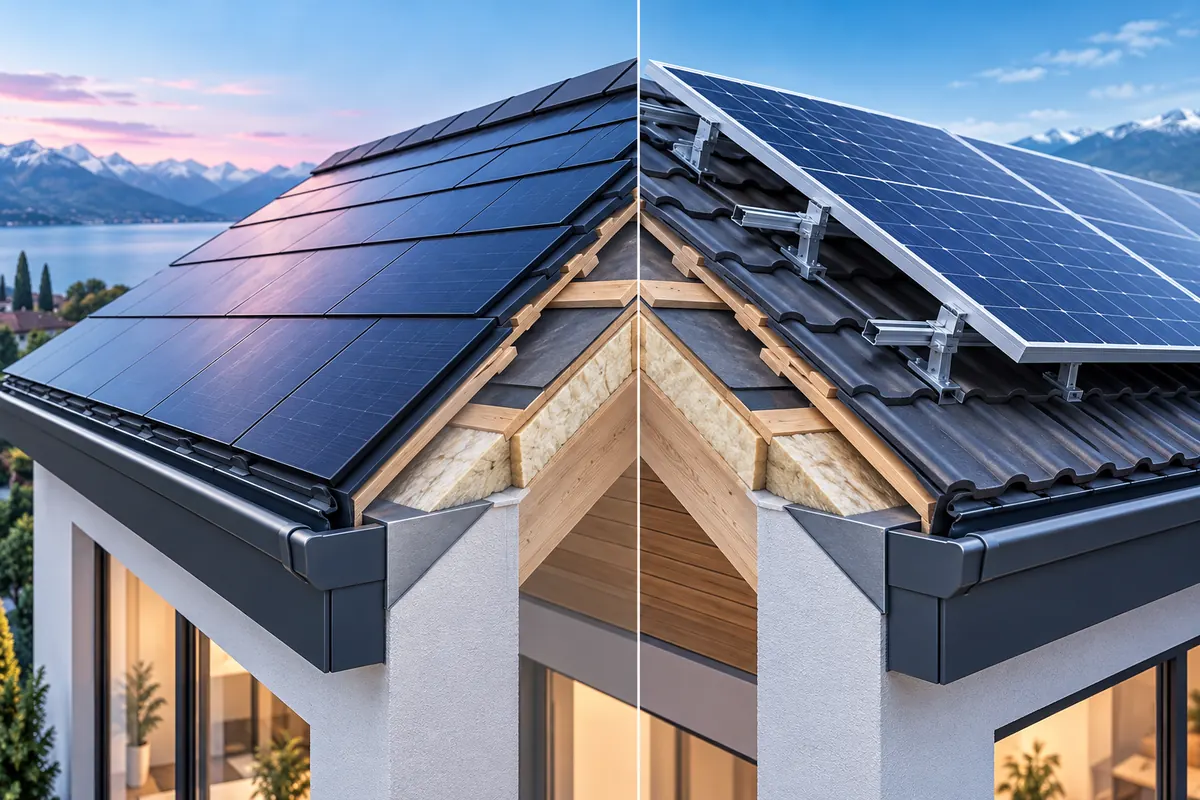
| Design question | BIPV | Rack-mounted rooftop PV |
|---|---|---|
| What does the PV product replace? | A building component such as roof covering, cladding or glazing. | Usually nothing; the underlying roof remains the weather barrier. |
| Who must coordinate the details? | Architect, envelope contractor, structural team and electrical designer from early design. | Roof and electrical teams still coordinate, with a separate mounting system. |
| What affects output? | Available building surface, orientation, transparency and shading. | Roof area, mounting angle, orientation and shading. |
| What happens during replacement? | Work may disturb the roof or façade assembly and its seals. | Modules may be removed while the underlying covering remains. |
Neither approach wins every project. BIPV can make use of surfaces that would already need a building product; a conventional array may offer simpler access or more freedom to optimize tilt. Compare both against the same building design, expected output, installation work and replacement plan.
Benefits and trade-offs to check before procurement
The attraction is dual use: one specified surface performs an architectural function and generates electricity. BIPV can also preserve a cleaner roofline or use vertical area on a building with limited roof space. Those benefits have value only when the installed product meets the building’s actual envelope requirements.
Costs and performance depend heavily on the project. Custom dimensions, appearance, glazing transparency, fire and weather requirements, mounting details and long-term replacement availability can change the economics. Façade generation may be lower than an optimally oriented roof array, while daylight or shading benefits may affect the building’s energy use in other ways. Model those effects separately rather than promising one universal payback period.
Ask who owns each interface. The module supplier, façade or roofing contractor, electrical installer and maintenance team should agree on the wiring route, access points, water-management details and replacement procedure before procurement locks in a product format.
Electrical protection in a BIPV installation
BIPV is still a photovoltaic electrical system. Its DC circuits need the same disciplined fault assessment as other PV arrays, with extra attention to cable routing and access inside the building envelope. Start with the circuit diagram: which strings are paralleled, what current could feed a fault, where are the conductors protected, and how can an affected circuit be isolated for service?
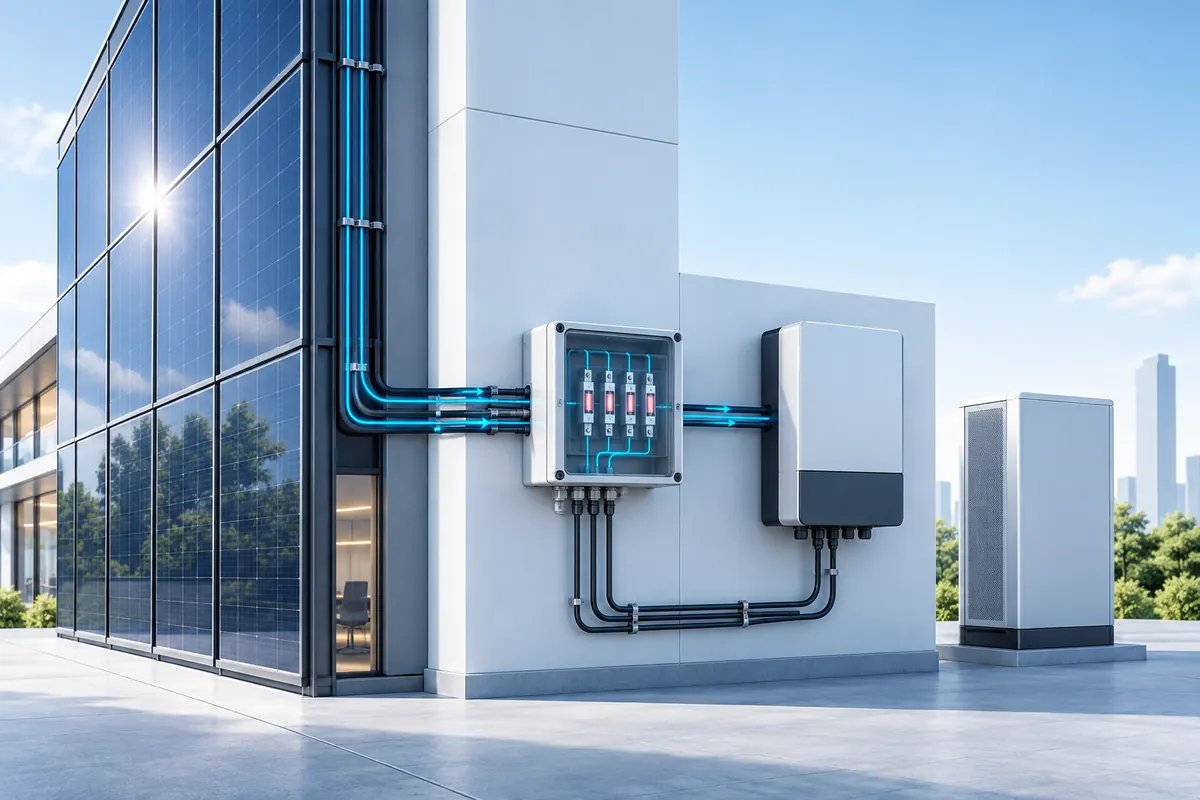
Where string or array fuses are required, select them from the module limits, maximum DC voltage, normal current, possible reverse current and installation conditions. The gpv fuse guide covers the photovoltaic fuse characteristic and the checks for string protection. A fuse will not by itself detect every ground fault or series arc; the protection plan must assign those functions to suitable equipment under the applicable project requirements.
Power-conversion and combined DC paths can present a different duty from an individual PV string. The dc fuse selection guide explains why voltage, interruption capability and circuit conditions must be checked for the specific installation point. Do not infer PV-string suitability from a general DC label or a matching ampere rating.
If the building includes battery storage, assess its protective devices as a separate circuit rather than treating the PV and battery sources as interchangeable. Chauron’s ess fuse application page provides context for that storage-side duty. The inverter or converter architecture determines whether and how one source can contribute to a fault on another side.
What to request when specifying a BIPV project
A good request package lets the building and electrical teams review the same proposed product. Include:
- The intended building function, location and replacement details for each BIPV element.
- Architectural drawings showing dimensions, weather seals, structural support and access for repair.
- Module electrical data, circuit grouping, shading assumptions and expected maximum DC voltage.
- Inverter and any storage configuration, including the single-line diagram and possible fault sources.
- Applicable building, fire and electrical requirements in the project jurisdiction, plus the evidence required for each selected component.
The IEC 63092 series addresses building-integrated photovoltaic modules and systems. Its system requirements in IEC 63092-2 cover BIPV systems used as building products and their mounting structures. The relevant standard and local rules must be checked for the actual design; naming the standard does not establish that any specific product has been certified.
Frequently asked questions about BIPV
What does BIPV stand for?
BIPV means building-integrated photovoltaics. The solar product is part of a building component and generates electricity while serving that component’s building function. Roofing, façade panels and glazing are common examples. The term describes an integration approach, not one cell technology or a universal module shape.
Is a solar panel on a roof BIPV?
Usually only when the photovoltaic product replaces a roof component and performs its required building function. A standard framed module fixed to rails above a completed roof is generally building-applied PV. The test is what the building would need if the solar product were removed: a replacement roof covering points toward BIPV.
Can BIPV be installed on an existing building?
Yes, if the retrofit replaces a suitable roof, façade or glazing component and the existing structure can accommodate the product. The assessment includes weatherproofing, load paths, electrical routing, access and replacement work. An ordinary add-on panel installation may be easier for a retrofit, but it serves a different building role.
Do BIPV windows generate as much electricity as opaque panels?
That cannot be assumed. Transparent or semi-transparent designs allow light through and have less light available for conversion than comparable opaque surfaces. Output also depends on orientation, shading, cell design and area. Compare product-specific electrical data and daylight requirements for the actual façade rather than a generic watt-per-square-metre claim.
Does every BIPV module need a fuse?
No universal per-module rule applies. Protection depends on how the modules are interconnected, possible reverse current, conductor and module limits, equipment instructions and local requirements. A designer may specify protection at a string, combiner or other circuit point. The circuit study determines the location and rating.
Can a BIPV system include battery storage?
Yes. Storage can be part of the wider solar power system, but its battery circuit has different current and fault characteristics from PV strings. The conversion architecture, controls and protection plan determine how the sources interact. Select protective devices for each duty and verify the complete single-line diagram.
What should a buyer compare between BIPV offers?
Compare the building function first: weather, structural, fire and glazing requirements as applicable. Then compare expected generation, electrical ratings, product documentation, installation interfaces, maintenance access and how a failed element can be replaced. A lower module price alone may leave significant building work or service costs outside the quote.
Discuss the protection design with Chauron
For a BIPV project, Chauron can review the fuse duty on the photovoltaic collection or associated DC circuits. Send the single-line diagram, module data, circuit voltages and currents, fault assessment, installation conditions and required approvals. The BIPV module and building-envelope specification remain with the project’s architectural and module suppliers.
If the project also includes battery storage, a pyrofuse may be considered for a commanded, single-use battery disconnect where the system design calls for it. This pyro fuse comparison explains how that role differs from a conventional fuse. Assess the battery circuit separately from BIPV string protection.