High-voltage DC circuit protection
High Voltage DC Fuse Manufacturer for EV, ESS & Charging Systems
Chauron supplies high-voltage DC fuses for electric vehicles (EVs), AI data centers (AIDC), energy storage systems (ESS), charging infrastructure, solar PV, industrial control systems, and other high-voltage systems. The product range covers voltages from 250 to 1500 VDC and currents from 10 to 3000 A, with model-specific breaking capacity, time-current characteristics, mounting information, and certification data to support engineering selection.250–1500VDCpublished DC range
10–3000Apublished current range
Up to 250kAmodel-specific breaking capacity
EV, ESS & EVSEapplication coverage
Chauron fuse range
High Voltage Fuse Products
Filter the catalog and open each product page for detailed dimensions, certifications and model data.Engineering selection
How to Select a High Voltage DC Fuse
Calculate current
Apply continuous load, overload profile, ambient temperature, cooling, enclosure and busbar or cable conditions.Check fault duty
Confirm prospective short-circuit current, circuit inductance and required breaking capacity at the stated voltage.Verify coordination
Review time-current curves, pre-arcing and total I²t, peak let-through, cycling, vibration, dimensions and mounting torque.Engineering note: A fuse cannot be selected from voltage and current alone. Breaking capacity, minimum breaking current, time-current performance and system coordination must be confirmed from the applicable model data.
Published range overview
Compare Chauron High Voltage Fuse Models
These values summarize data published on the current product pages. Confirm the complete duty profile and latest datasheet before specifying a model.| Model | Voltage type | Rated current | Breaking capacity | Standards / certification | Typical use | Details |
|---|---|---|---|---|---|---|
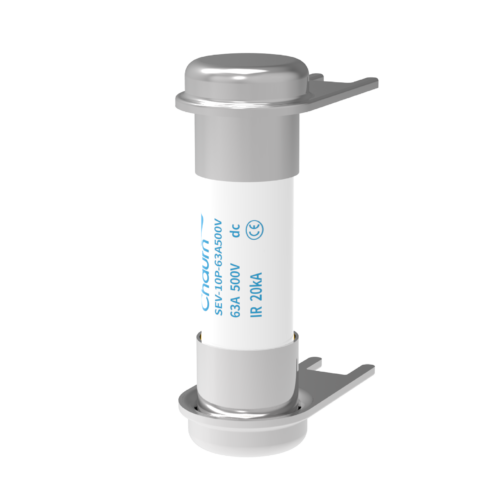
| SEV-10P | 500–1000VDC | 10–63A | 10–20kA, L/R ≤ 2ms | ISO 8820, GB/T 31465, JASO D622; TÜV, CCC | EV auxiliary circuits, OBC, DC/DC, storage | View model |
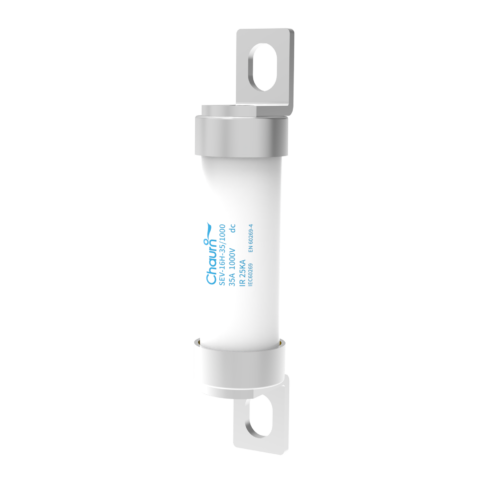
| SEV-16H | 250–1000VDC | 30–200A | 20–25kA, L/R ≤ 2ms | ISO 8820, GB/T 13539, JASO D622, IEC 60269; TÜV, CCC | EV battery modules, supercapacitors, charging | View model |
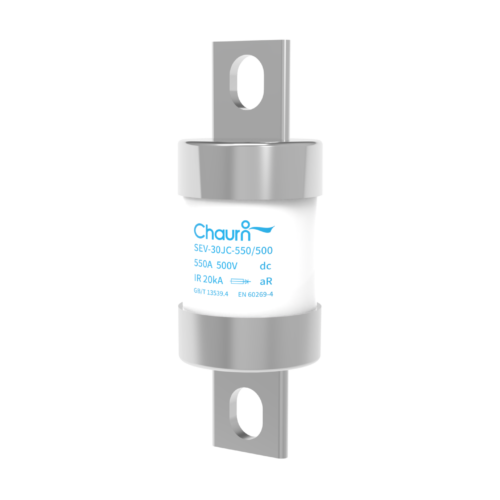
| SEV-30JC | 250–500VDC | 100–500A | 20kA, L/R ≤ 2ms | ISO 8820, GB/T 13539, JASO D622, IEC 60269; TÜV, CCC | EV and battery DC protection | View model |
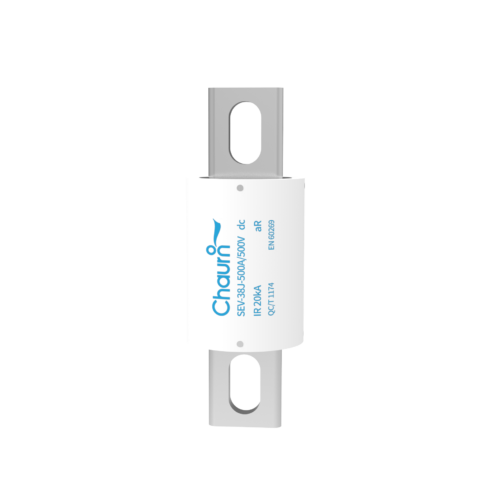
| SEV-38J | 750–1000VDC | 100–400A* | 50kA, L/R ≤ 10ms | ISO 8820, GB/T 13539, JASO D622, IEC 60269; CE, CCC | EV traction, battery, ESS and charging | View model |
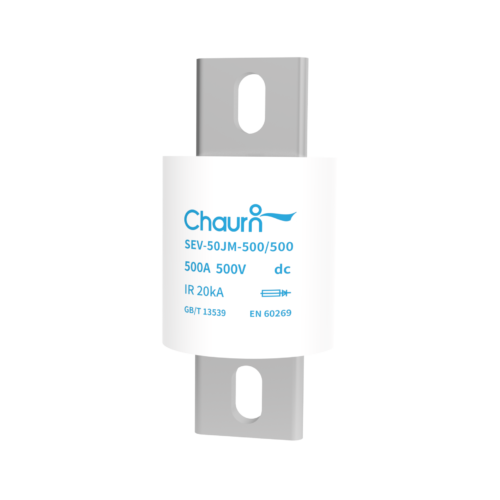
| SEV-50JM | 500VDC* | 125–630A* | 20kA, L/R ≤ 2ms | ISO 8820, GB/T 31465, IEC 60269, GB/T 13539 | High-current DC protection | View model |
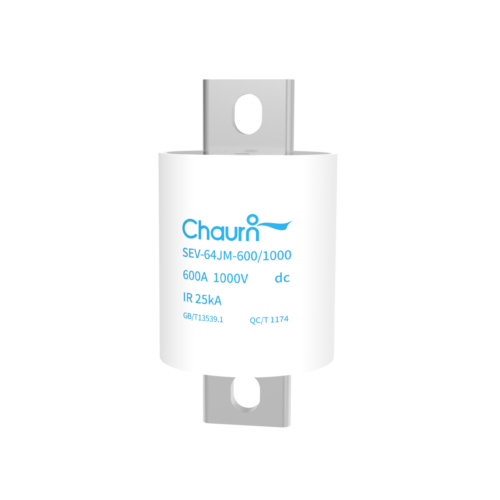
| SEV-64J | 1000VDC | 400–800A | 25kA, L/R ≤ 5ms | GB/T 13539.1, GB/T 13539.4 | EV main circuits and high-current battery systems | View model |
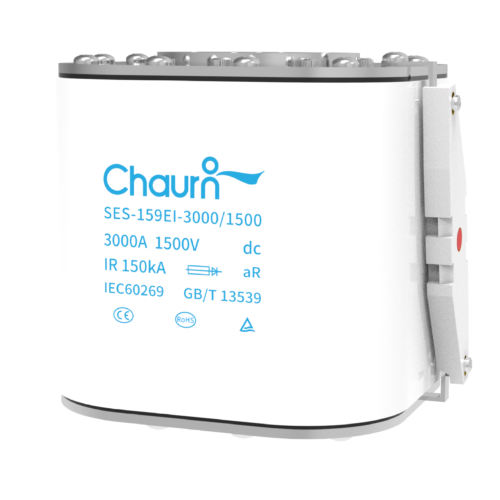
| SES-159EI | 1500VDC | 1250–3000A | 250kA | IEC 60269-4, GB/T 13539.4; TÜV, CCC | ESS high-voltage distribution and PCS | View model |
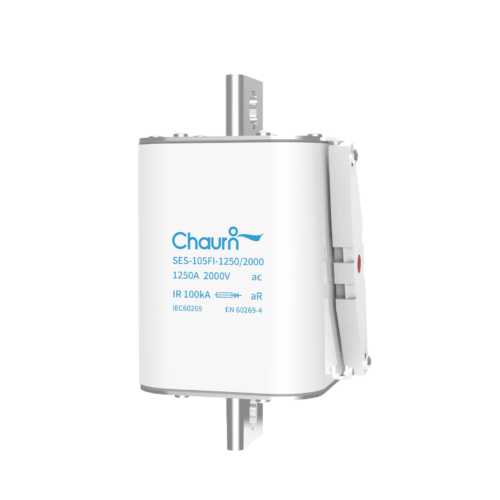
| SES-105FI | 2000VAC | 630–1250A | 100kA | IEC 60269, GB/T 13539 | AC high-current equipment; related product | View model |
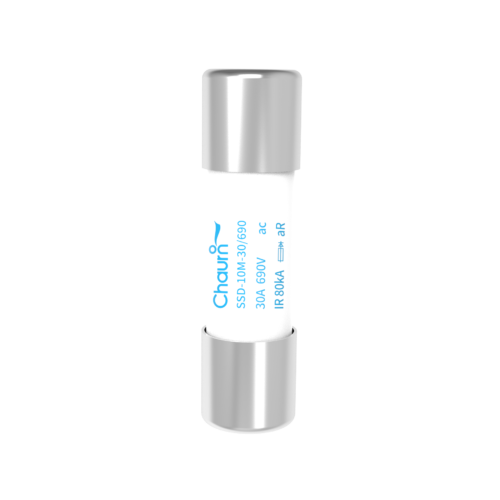
| SSD-10M | 690VAC | 2–32A | 80kA | IEC 60269 | AC auxiliary and charging equipment; related product | View model |
*The SEV-38J and SEV-50JM product summaries and dimension tables currently show different current ranges or voltage wording. Confirm the exact variant with Chauron engineering before design-in.
Direct answer
What Is a High Voltage DC Fuse?
A high voltage DC fuse is a one-time overcurrent protection device designed to interrupt sustained direct-current faults without allowing the arc to continue. Compared with an AC circuit, a DC circuit has no natural current zero crossing, so the fuse must be designed and tested for the stated DC voltage, prospective fault current and circuit time constant.DC fuse vs. AC fuse
- Voltage rating: use a verified DC rating for DC circuits.
- Arc interruption: DC faults require greater arc-control capability.
- Breaking conditions: evaluate fault current and L/R or inductance.
- Coordination: compare time-current curves and I²t with cables, batteries and power electronics.
Application coverage
Where HVDC Fuses Are Used
Electric vehicles
Battery packs, BDU/PDU, traction inverters, OBC, DC/DC converters and auxiliary high-voltage circuits.Energy storage
Battery racks, battery connection panels, combiner circuits, PCS and container-level protection.Charging infrastructure
DC fast chargers, charging modules, DC buses, cabinets and supporting power conversion equipment.Industrial DC systems
Data-center power, rail, wind and solar equipment, converters, UPS and other high-energy DC networks.Manufacturer capability
Why Work With Chauron
Model-specific engineering
Selection considers voltage, current, fault level, inductance, time-current behavior, thermal conditions and mechanical constraints.Testing and quality systems
Chauron presents IATF 16949 and management-system certifications together with CNAS-accredited laboratory capability on its corporate website.Application breadth
The product range supports EV, ESS, charging, wind-solar, data-center and customer-specific power protection projects.Frequently asked questions